
the terrible present
then and now, documents and parallels

About five years ago, I went to Heidelberg, Germany, to learn German for the month of August. Heidelberg is a quaint little university city, with a beautiful old downtown and a half-destroyed castle. Unlike most of the ruined castles in Germany, this one didn’t have anything to do with either of the World Wars—instead, it had been destroyed in one of the many wars between France and the Palatinate, then further mined for stone for newer castles. Heidelberg’s old city had mostly been spared from all the heavy bombing, and the August sun washed the baroque buildings made of local red sandstone, and it felt beautiful, and open, and peaceful.
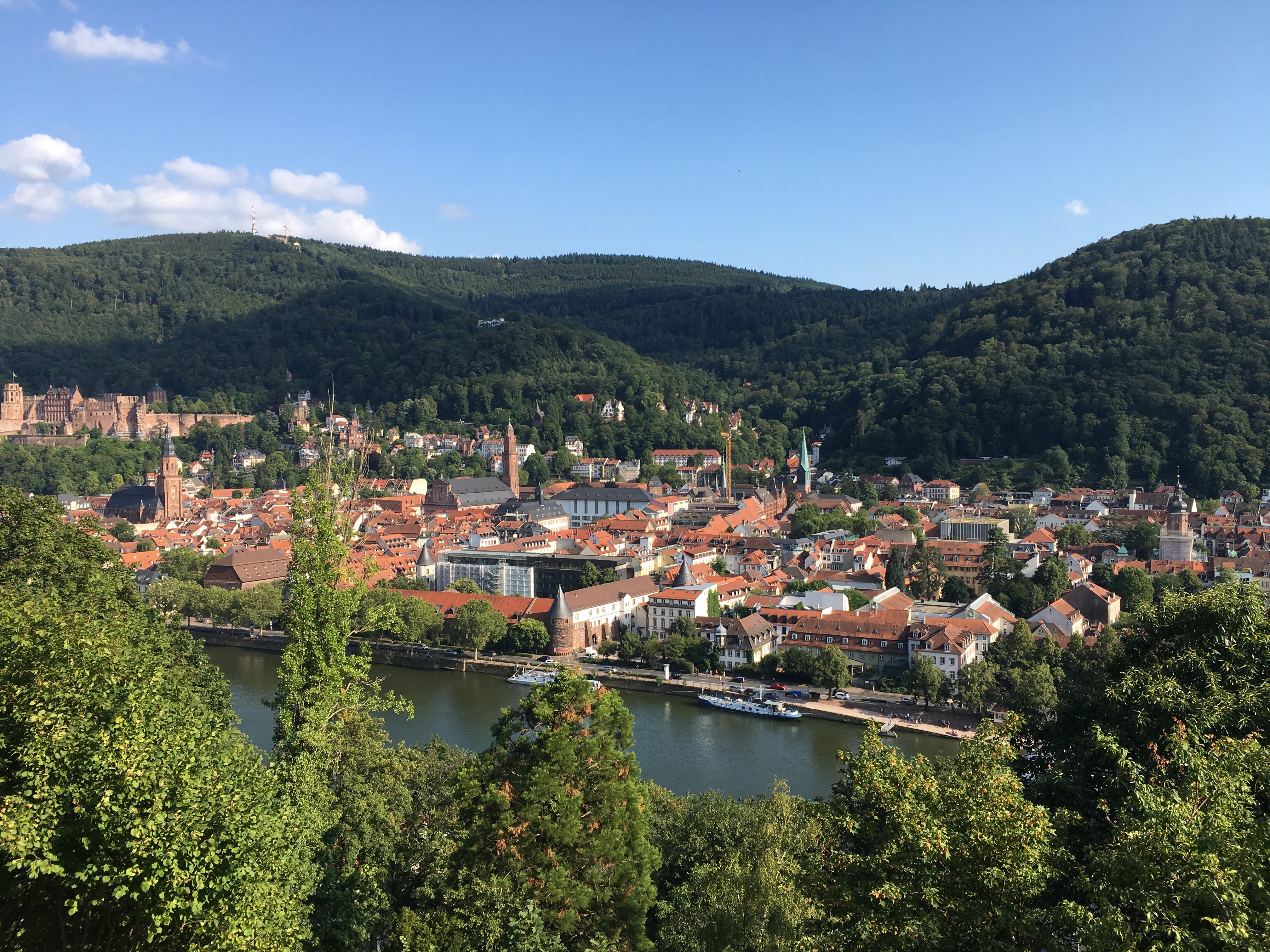
At the time, I was twenty, and so the first week of being in Heidelberg was full of the excitement of legal alcohol purchases and cheap groceries at the local ALDI, which was in a complex called the “Mathematikon” that had decorative abacuses and Möbius strips in the central courtyard. I ate Spanish peaches by the half-dozen, thick slices of Bauernbrot, European strawberries, 3-euro Currywurst, cheap yogurt and cheese. The first day in Heidelberg, as I waited to be shown to my dorm, I stood in a group with our luggage. We introduced ourselves in a circle and then milled about, waiting. A girl in a turquoise hijab approached me, asking in Hebrew if I was from the Hebrew University. I responded in Hebrew that no, I was coming from the States, but we exchanged numbers and went together to ALDI to get groceries after settling in. She introduced me to the large group of students from the Hebrew University, both Israeli and Palestinian, who were required to learn a third or fourth language for their graduate degrees. One of them was a settler from Ma’ale Adumim who, when I talked about the occupation, insisted that “you should come visit, where I live, it doesn’t look like an occupation,” and my Hebrew went silent from rage. Another was an Israeli leftist who wore flat sandals and mostly avoided everyone. My new friend was from the towns surrounding East Jerusalem, and she refused to talk about it. Somehow we all made Shakshuka together once, wished the Muslims happy Eid, wished the Jews Shabbat shalom and an easy fast for Tisha B’Av. Our simmering divides broke open at every lunchtime conversation and then quieted, temporarily, over a coffee or a beer—much like the whole geopolitical situation.
It was my first time living alone abroad, and it was easy. I brought two-liter bottles of beer to potlucks of Turkish stuffed peppers, soup from Beijing, and pasta made by an Italian named Flavia who took great care in explaining the proper way to make spaghetti. “I hear Americans...” She mimed snapping the spaghetti in two, looking horrified. “This is how you break an Italian’s heart!” I walked up the Philosophenweg to look down over the city. I learned the rhythms of German in the southwest of the country, saw “Grüß Gott!” and “Servus!” written on signs, and learned where I could actually get good coffee, not just automated cappuccinos.
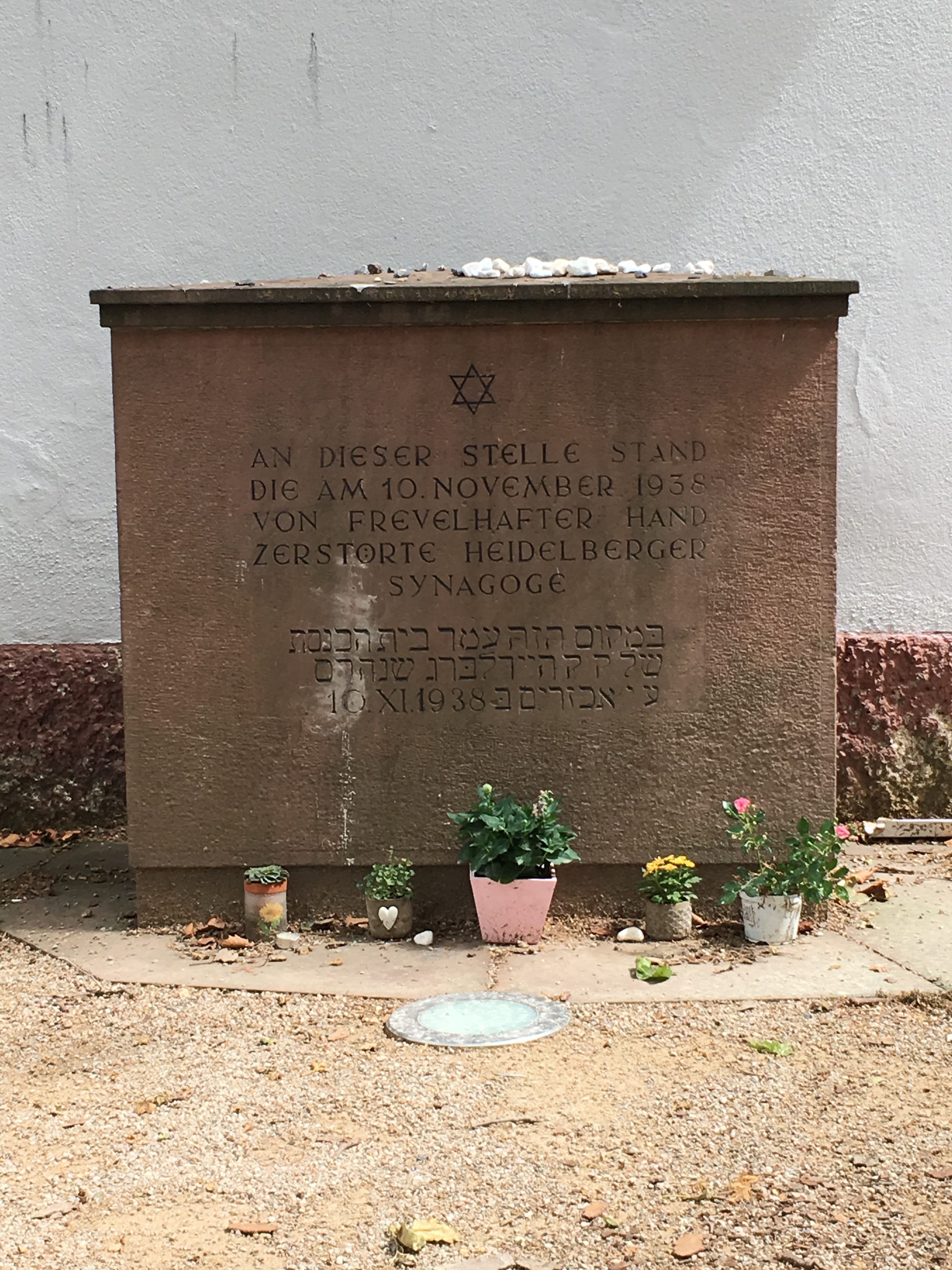
It was easy, except when it wasn’t. In every German city—Heidelberg, too—I kept rounding corners and finding memorials for the war. They were always somewhere near the center of the city, a set of statues or, in Heidelberg, an empty square that marked the synagogue and the bimah that were destroyed. The first weekend, the program took us to visit Nürnberg. It wasn’t anything new, not really—I’d known some part of this history since I was three or four—but the thingness of it made me feel like some part of my insides had been shaken out, made hollow. Then, we would return to Heidelberg, probably go for a beer, and try to put it out of our minds.
August wound to a close, which meant I was going southwest, closer to the French border. This was the real reason I had gone to Germany; the scholarship to learn German was a convenient excuse. My grandfather was born in Karlsruhe, a city that, unlike Heidelberg, was completely destroyed in the bombings of World War II. I had always known that his mother, my great-grandmother, was the one who saved him when they were deported, by allowing him to be separated from her and taken by a French resistance organization. He spent the war in Switzerland, and she was sent to her death in Poland, and the reason I was visiting was because, a few years earlier, I’d discovered that the Generallandesarchiv was in possession of her passport. It had been news to anyone in my family that she’d even had a passport in the first place, let alone that somehow the state archives had come to be in possession of it. I obsessed over it, and over her, the choice she had to make to let her child be taken away and be saved. I wanted to see if I could find out why the passport was still there.
I took the train down to Karlsruhe, which translates to “Karl’s peace,” and lugged my suitcase onto the tram, across town, and up five flights to the very top of a building where I had rented a room in an AirBnB. On the way, I caught a glimpse of the building that now stood where my grandfather had spent the first years of his life. One of the only saved buildings in Karlsruhe was a pastel yellow castle, the peaceful place where some duke or king had decided to found the city, and the whole downtown extended radially from there like the gentle September sun. I spent my first day there, a Sunday, walking the grand halls of an art museum housed in a former weapons factory, unsure of what to do. I felt frozen in time, waiting.
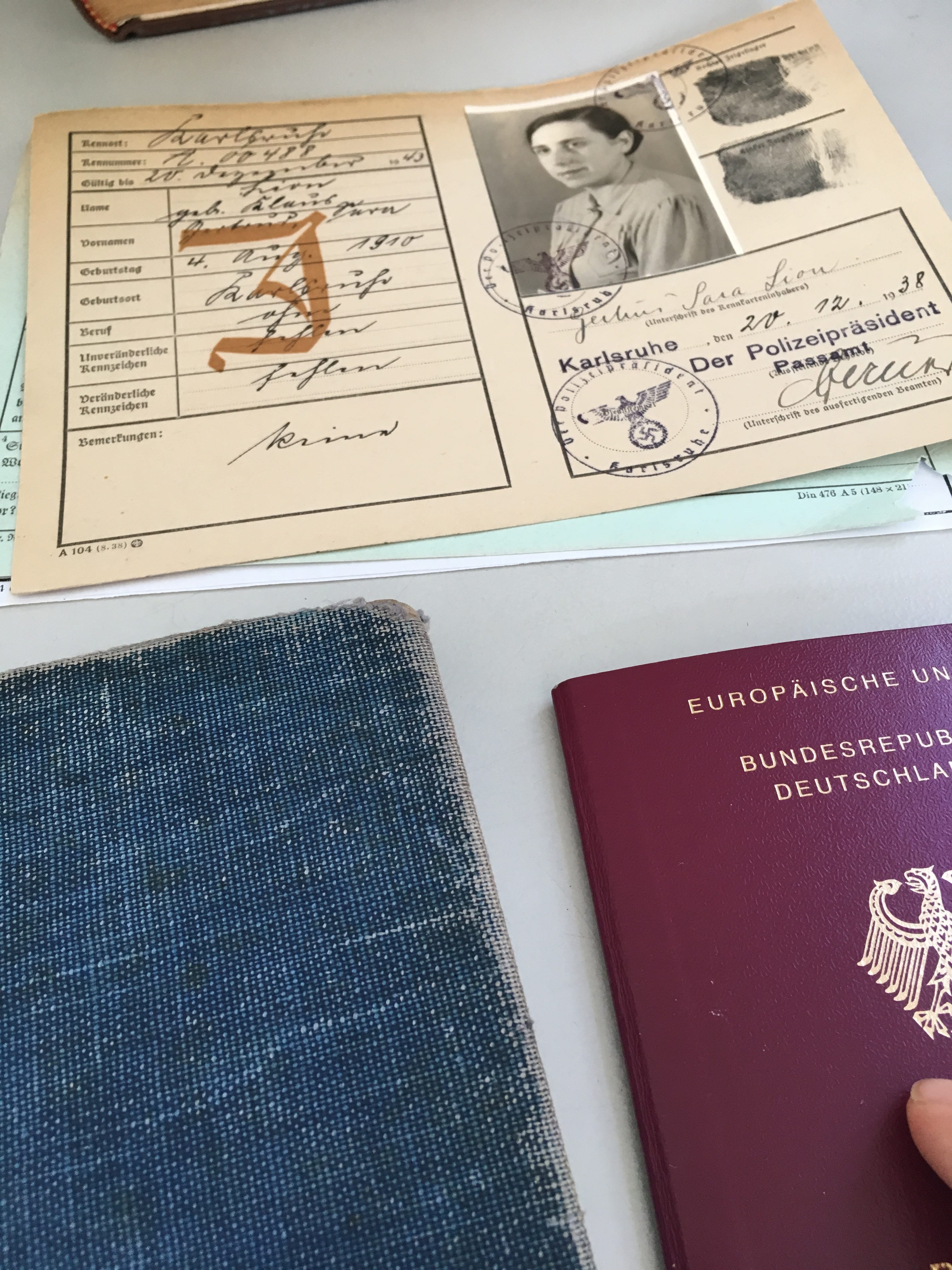
I slept badly that night and woke early the next day to go to the city archives. These ones had a register noting my great-grandparents’ marriage and the birth of their son, and the Jewish identity cards, A5-sized documents printed on thick cardstock with a bold yellow J under the print, as a watermark. I stared at my great-grandmother’s card for a while, with the stamps and the signatures and her somber picture, so different from the one that had been framed in our house growing up. I didn’t cry, though I kind of wished I would. I stared at her picture, tried to feel the paper in my hands. It felt insane and also normal. I left the archives and went for ice cream that afternoon.
The next day was for the Generallandesarchiv, the state archive. That one was further away—I took several trams and walked some distance and arrived out of breath to my appointment. There were no pictures allowed in these archives, which I noted somewhat resentfully as the archive workers retrieved the files. They gave me several stacks of documents, more than I’d expected. I took them to my seat and opened the top one. There it was: the passport.
I’m not sure what I expected to happen. My hands didn’t shake as I picked it up—it was just a little booklet, dark red. I felt more distant than I’d expected. I flipped through the pages, slowly, and took notes in the cloth-bound notebook I’d brought along. But I hadn’t slept well, and as the morning drew on, I got hungry. I kept catching myself looking out the window to the bushy trees outside. You are here, I kept telling myself. I took out my own German passport and laid it right next to hers. I couldn’t believe it.
There’s a poem that I translated sometime in the past few years, by the Hebrew-language poet Yael Globerman. Her book, The Map of the Peninsula, was gifted to me by my grandmother shortly before she passed, and I’ve been working through the poems, slowly. There’s one, called “Survivor Cycle,” that I translated last year, about the trauma she saw linger in her parents. In the first of six sections, she writes:
sometimes there is a flash like pages flipping
between then and now, a splinter of delay,
a blink that fills with void
when you find our faces.
I am here by your side and you are searching behind eyes.
That flash—I was looking for a flash like that, the ability to see my great-grandmother as she was then, her personhood and maybe even her personality. I have never known what she was like and, since my grandfather passed twenty years ago, she is no longer in anyone’s living memory. I sat in the archives flipping between her documents and mine, looking at her eyes in the picture, trying to find the vestige of something. I think I’d hoped that there would be something else left of her somewhere in the files, but there was nothing. Everything that pertained to her was about her death, the circumstances of it and the things that preceded it, the bookkeeping of restitution.
Amid all the documents, there was no answer to my question of why the archive had the passport. I was left with the same supposition I’d had when I entered: that the document had been confiscated sometime along the way, and then kept by the officials—for what reason, I didn’t know. The passport, issued in the 1930s, even had a handwritten note that my grandfather had been born, that he could travel with her. Under pre-war laws, she had all the documents she’d needed to travel, but then the state decided it didn’t matter, and they meant nothing. Everyone knew that the stripping of rights could be coming—things looked bad; my great-grandfather had already left for London, trying to find work there to bring his wife and child. Only a few months passed, and it was too late.
It feels excessive sometimes, to insist on the memory of the war and of that genocide, when so many people instrumentalize it to their own ends—indeed, when so many people have taken “never again” to mean “never again for us” and not “never again for anyone.” Nothing needs to be compared to be important, but the parallels insist upon themselves. I have found myself thinking a lot about my great-grandmother’s passport the past few days, since ICE disappeared Mahmoud Khalil—and how documents, like laws, only matter as long as the state and its citizens all believe they matter. And I have been angry beyond my means, enraged to see politicians and institutions chalk up his abduction to a matter of following the law. We don’t have laws anymore, unless they’re the laws of the billionaires. The rest essentially don’t exist.
I feel so helpless these days, shaken-out. What is there to say? Nothing, except to organize, to protect each other, and to understand that if ICE can disappear a green card holder, they can disappear anyone. If they can stop granting birthright citizenship, they can then take steps to revoke it. We must fight for Mahmoud Khalil’s release and must refuse to give the fascists any inch of anything, because they are not appeasable. My father has always said that ICE is not an agency; it’s a militia. It has existed for less time than I’ve been alive—we do not want it and we do not need it.
What I think is also important to remember is that we survive these things, quite literally, because ordinary people agree to protect each other. I am trying to ask myself—Who can I protect? Who, close to me, needs protection? I am trying to lay things out on the table, and to tell myself, you are here. It matters that we are able to see this situation for what it is. Maybe some of that is seeing that “flash like pages flipping / between then and now.” But then we have to detangle ourself from the memory. We are here, and here is now.
Some resources to close
Please, if you are able, donate to support Mahmoud Khalil’s family and legal defense.
Call your representatives to demand the immediate release of Mahmoud Khalil.
Unrelated: It’s rent hike season in Montréal. Unless you live in new construction, you legally have the right to refuse your rent increase and remain in your apartment, even before you negotiate with your landlord. The SLAM-MATU autonomous tenants’ union has some resources on organizing your building and refusing together!
What I’ve been up to
I’ve been visiting grad schools for PhD admissions. It’s been lovely and also felt insane in this whole political moment. I have no idea what I’m going to do.
The Rich translation has been getting some more good press—for French readers, check out the reviews in Têtu and Télérama!
I went to see Niagara falls for the first time. Niagara was beautiful and very strange. I’d been told it was like the Vegas of the north but I think it’s more like a boardwalk town, which they slapped right by the most impressive waterfall in the world. The views are fantastic and the waxworks are terrible. It was so bizarre—I can’t wait to go back.
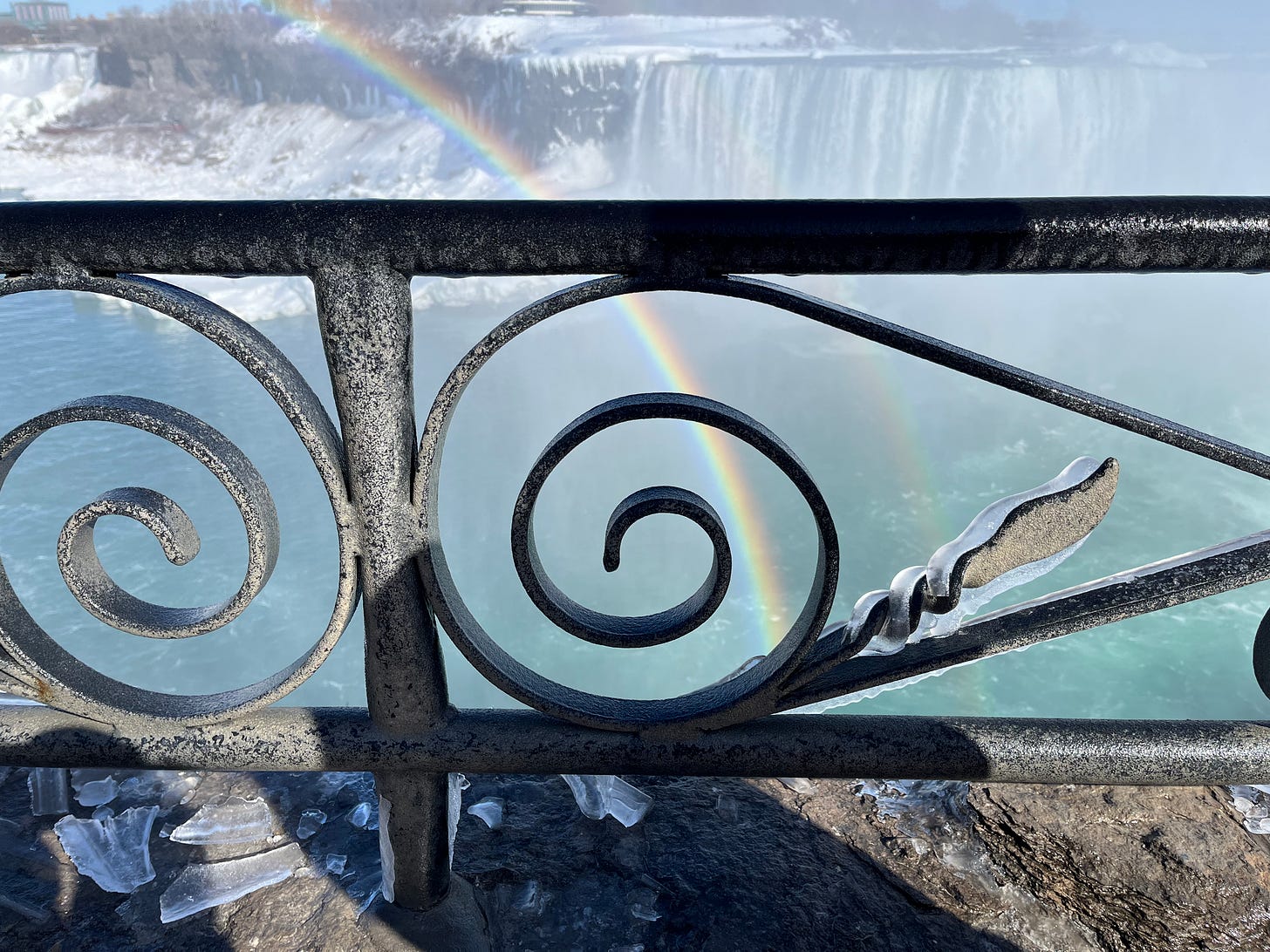
A very pretty ice formation on the iron railings at Niagara, backed by a rainbow and a view of Horseshoe Falls. B is a doctor!! I went to see his defense, which was very good, and I’m very proud to be dating a doctor now. He can now prescribe soup, any variant of semiring geometry, and not much else.
I got sick, again. Thank god for antibiotics.
Until next time—
Shira I love reading your writing TvT so so good!!